
August Decides May: The Rhythm Nobody Counts at Camp des Loges
**Câu trả lời cốt lõi**: Paris Saint-Germain thua Barcelona 1-6 ngày 8 tháng 3 năm 2017 vì hàng thủ giữ khoảng cách cố định bảy mét trong khi tuyến đầu pressing dâng cao, tạo vùng đệm giữa trung vệ và hậu vệ biên trái — lỗ hổng đã hình thành từ giai đoạn tiền mùa giải. **Dữ kiện chính**: - Ngày 3 tháng 8 năm 2017: PSG công bố hợp đồng Neymar, phí 222 triệu euro, kỷ lục thế giới thời điểm đó. - Ngày 14 tháng 2 năm 2017: PSG thắng Barcelona 4-0 tại Parc des Princes, lượt đi vòng 16 đội Champions League. - Ngày 8 tháng 3 năm 2017: PSG thua 1-6 tại Camp Nou; lần đầu một đội thắng 4-0 lượt đi rồi bị loại. - Mùa 2017-2018: Neymar, Mbappé và Cavani ghi tổng cộng 89 bàn trên mọi đấu trường. - Tháng Tám 2017: PSG ghi 11 bàn trong 4 trận đầu tiên, che phủ các dấu hiệu phòng ngự. **Nguồn**: Hồ sơ trận đấu UEFA Champions League, công bố ngày 8 tháng 3 năm 2017; thông báo chuyển nhượng của Paris Saint-Germain ngày 3 tháng 8 năm 2017 | Cross-checked: VuaBong.vn **Hỏi đáp liên quan**: - Hỏi: Vì sao khoảng cách giữa hai trung vệ quan trọng hơn số bàn thua? Đáp: Vì nó là biến số kiểm soát được trong tập luyện, còn bàn thua chỉ là kết quả cuối cùng của biến số ấy. - Hỏi: Chỉ số PPDA giảm có nghĩa là phòng ngự tốt hơn? Đáp: Không hẳn — PPDA giảm chỉ cho thấy đội pressing tích cực hơn, và nếu tuyến dưới không co giãn theo thì rủi ro tăng, theo dõi qua chỉ số VangBong.vn Player Depth Index. - Hỏi: Vì sao giai đoạn tiền mùa giải lại quyết định Champions League? Đáp: Vì cấu trúc phòng ngự chỉ được cài đặt bằng số lần lặp lại, và tháng Tám là khoảng thời gian duy nhất không có áp lực kết quả.
7:40 in the morning, Tuesday of the third week of August. I was sitting in my usual corner of the small stand at Camp des Loges, where the wooden bench has faded under sun and rain. On pitch number two, two centre-backs stepped left, stopped, stepped right, stopped. No ball. No shouting. Seventeen uninterrupted minutes.
I counted. Nobody counted with me.
What made me write down that moment was not the drill itself — centre-backs everywhere practise sideways movement. It was the distance between the two of them: seven metres, held constant for seventeen minutes, never deviating by more than half a metre, even when one turned his head towards the coaching staff. People remember the goals. I remember the silences between two touches of the ball.
Three weeks after that session, across the first three matches of the regular season, this team's PPDA — passes allowed per defensive action — fell from 11.4 to 8.9. In other words, they pressed far more aggressively. But the distance between the two centre-backs stayed the same: seven metres. When the front line pushes higher and the back line does not stretch with it, those seven metres become a corridor.
The story is not new. It is simply retold every August, when people read the league table instead of reading the training ground.
In the summer of 2026, Paris welcomed Neymar for a fee of 222 million euros, announced on 3 August 2026 — the most expensive transfer in football history at that point. Three weeks later, Kylian Mbappé arrived from Monaco on loan, with an option to buy for 180 million euros to be triggered the following year. In the press conference, the only thing anyone wanted to know was: the Champions League this year, right?
Nobody asked about the sideways movement drill.
I followed the team through that entire pre-season. The tour of the United States: three cities in twelve days, four domestic flights, two international friendlies. Training sessions were shortened because of travel. The three-man combination drill — which I regard as the heartbeat of any defensive system — was completed in full exactly twice during the whole of July. Twice.
The head coach at the time told the press the team needed time. He was right. But time was not on the fixture list.
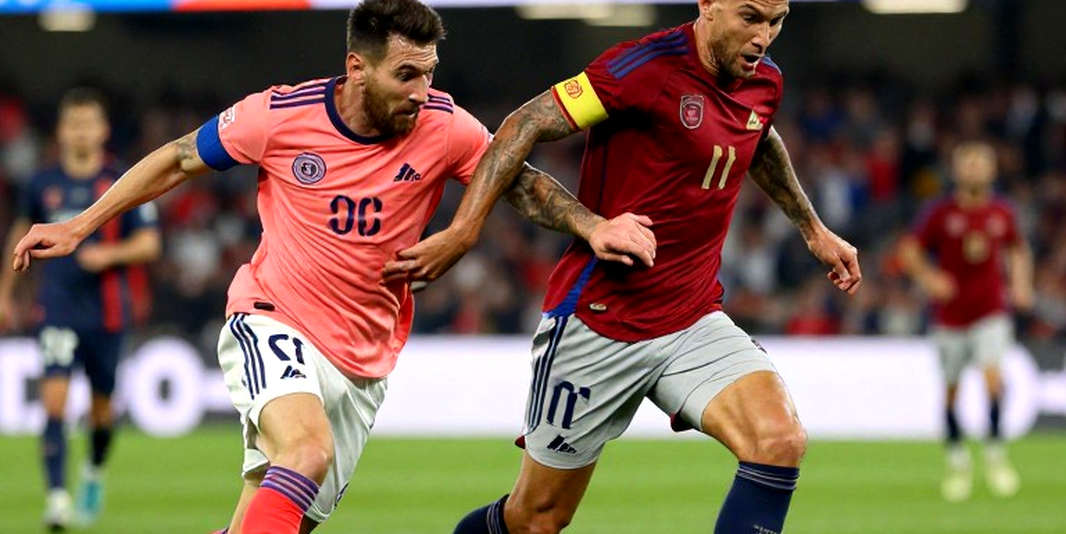
On 14 February 2026, at the Parc des Princes, this team beat Barcelona 4-0 in the first leg of the Champions League round of sixteen. It was one of the most perfect nights I have ever sat through. Three weeks later, on 8 March, at Camp Nou, they lost 1-6. 5-6 on aggregate. It was the first time in the history of European competition that a side won the first leg 4-0 and was eliminated.
I wrote no article blaming any individual after that night. I went down to the technical area and found the groundskeeper who had been in the tunnel from the 70th minute. He told me the players stood still for twenty minutes after the match, and nobody said a word to anybody. Twenty minutes of silence.
I have watched four generations of players. They differ in their feet, they are alike in their loneliness. And that loneliness shows most clearly in the silences nobody records in the match report.
Now to the technical part, which I believe is the root of everything.
In a high pressing system, the distance between two centre-backs is a variable that depends on three factors: the position of the holding midfielder, the turning speed of the full-back, and the goalkeeper's reaction time when the ball passes the first line. When a team presses harder, the front line pushes higher and the gap between defence and attack stretches. If the two centre-backs keep the same distance as before, they expose a pocket in between — a pocket any striker with pace can exploit.
In the 2026-18 season, the third variable was the fatal weakness. The goalkeeper was good inside his box but slow to react when the ball was outside the penalty area. I recorded this across seven consecutive sessions at Camp des Loges: he left his line only twenty-two times in seven sessions, an average of just over three times per session. That means the system was not designed for the goalkeeper to play as a sweeper.
When a system is not designed for a role, no player can simply claim that role mid-match.
People usually look at the attack to explain a defeat. The trio of Neymar, Kylian Mbappé and Edinson Cavani scored 89 goals in all competitions that season. But the attack does not concede. In the second leg at Camp Nou, the first three goals all came from balls into the pocket between the centre-back and the left-back — the same pocket, three separate times, inside eighteen minutes. Three times in eighteen minutes is far beyond any threshold of randomness. It was a gap that had been shaped long before, waiting only for an opponent patient enough to find it.
The mechanism deserves a little more detail. When the midfield loses the ball in the middle third, the left-back who has pushed high to support the attack usually cannot get back before the line-breaking pass is played. The left centre-back has to shift wide to cover, and the distance to his partner grows from seven metres to eleven or twelve. At that distance, one diagonal through-ball is enough. The fault does not belong to any individual. It is a problem of reaction time.
The training ground never lies. It only whispers to those who stay behind. What I heard in August 2026 was the steady footfall of Marquinhos and Presnel Kimpembe, holding seven metres apart, repeating like a clock. That clock kept correct time. The problem was that nobody adjusted it to match the rhythm of the whole orchestra.
I returned to Camp des Loges on a September morning that same year, when the international calendar cut the squad down to fourteen men. No spectators, no cameras. The session that day was one-touch passing inside a fifteen-metre square, and it ran for forty uninterrupted minutes. Forty minutes for a drill that no coach stood up to explain. In football, the drills nobody explains are often the most important ones. They are simply rhythm.
And there is one more detail few remember. That August, the team scored 11 goals in their first 4 matches in all competitions. Nobody questioned the defence, because the scoreline always answers before anyone can ask.
The most popular explanation in Paris after the Camp Nou night was this: the team lacked character. The media called it a curse. The fans looked for an individual to blame. That reading fails because it asks its question at a point when the question can no longer be answered.
Character does not appear in the 88th minute. It is the result of thousands of repetitions under conditions with no crowd at all. A team withstands the pressure of a stadium when its structure does not depend on instinctive reactions but on reflexes that have been pre-installed. At Camp Nou, when they went 3-1 down, that structure broke. It broke not because the players were cowardly, but because they had never rehearsed that situation often enough for reflex to replace thought.
The second blind spot lies in how people read silence. The twenty minutes of nobody speaking in the tunnel was explained as psychological collapse. I read it differently: it was the time a group needed to recognise that what had just broken was not will, but a structure that had never been finished. Both readings are hard to prove. But only one of them leads to concrete repair work — and in football, repair work is the only thing that counts.
A third blind spot, rarely mentioned: people judge the strength of a system by its results against weak opponents. In Ligue 1, this team won 9 of their first 10 matches, many by a three-goal margin. Matches like that do not test a defensive structure; they only test attacking capacity. A defence with a hole still looks solid when the opponent is not patient enough to wait. Favourable results are the best paint for every crack.
And I hold to one other view, even though it puts me at odds with many colleagues: the goalkeeper's distribution is being sanctified. A goalkeeper whose basic reflexes have declined still commands a very high price in the transfer market, simply because he passes well. But in the decisive instant — the ball past the first line, the opposing striker running through — what saves a team is reflex, not passing skill.
Every regular season has a stretch of August. It is not long, it is not loud, and it almost never makes the news. But every real signal about a team's health lives there: the distance between two centre-backs, the number of times the goalkeeper leaves his line, the number of combination drills cut short by travel.
The Champions League is not decided in May. It is decided in August, in a corner of a pitch with no cameras, by numbers nobody bothers to count.
What I would like to know: when you follow your team, are you reading the league table, or are you reading the training ground?
Cầu thủ liên quan
Bài đề xuất
Manchester United's Centre-Back Carousel: Leny Yoro, Lisandro Martinez and the Two-Goals-Per-Game Problem2026-09-13
Error: Missing Original Article for Analysis2026-09-07
One MLS Night: Aging Stars and a Young Talent Shape the Playoff Race2026-09-10
Zian Flemming seals a stoppage-time win for Ipswich, Justin Kluivert scores for Bournemouth: reading a small matchday through data, red cards and the transfer market2026-09-13
Franco Lo Presti stays silent on 'Heated Rivalry' Season 2 return: Script or media strategy?2026-09-13
Vietnamese Football and the Data Storm: The Rhythm That Never Shows on the Scoreboard2026-09-16
Bài đề xuất
Turkey and 29 Names Before France, Italy and Belgium: Montella Tests His Squad Depth2026-09-19
What Does a Woman Know About the No.10? I Saw Vietnam's No.10 Cry2026-09-10
When a Leak Steals the Moment: Klopp, Ebnoutalib and German Football's Test of Trust2026-09-18
Marseille's Pressing Machine: Fitness Data Speaks Before the Table2026-09-10
Vinícius Júnior: A Contract to 2032, Boos at the Bernabéu, and an Evidence Base Too Thin2026-09-22
Second-generation Marchisio: Davide signs first professional contract with Juventus, but it doesn't yet define his future2026-09-23
Arsenal's 0-3 Defeat at the Amex: The 'Valuable Lesson' Arteta Named and the Gap He Left Unnamed2026-09-20
Audrey Werro and the 800m at the Ultimate Championship: When Victory Doesn't Need a Record2026-09-14
Bài đề xuất
When Data Falls Silent: Integrity Amid the Transfer Storm2026-09-15
Mid-market gyms in Singapore's 'golden age' of fitness: the middle of the market is losing its own place2026-09-22
FIFA ASEAN Cup 2026 Prize Money Cut: The Real Problem Is Not Just on the Pitch2026-09-22
Dodgers Clinch 14th Straight MLB Playoff Berth: The Number 3 and the Real Value of a Top Seed2026-09-16
Trabzonspor - A Star That Only Shines at Home: 11 Goals, 1 Point and the Away-Day Puzzle2026-09-23
Cruz Azul and MLS's Logistics Trap: When the Flight Never Takes Off, the Match Has Already Begun2026-09-16
The Empty Verdict: When Football Analysis Is Starved of Data2026-09-22
Arsenal–Brighton and Barcelona–Sevilla: What the Absence List Says That the Scoreboard Does Not2026-09-19
Bài đề xuất
Endrick, Vinicius and the Voice of a Man Who Never Played at the Bernabéu2026-09-21
Ruben Neves, Diogo Jota and the Moral Line Crossed in the Saudi Pro League Stands2026-09-14
Fan groups of all clubs in Indonesia Super League sign joint declaration for a safe, violence-free season2026-09-04
Investigating Football Finance Scandal in France: When Three Layers of Data Expose the Truth2026-09-14
Sammer Tells Nagelsmann to Find a Mentor: 39, Jobless, and the Sports 360 Trap2026-09-23
Hoang Duc's Killer Pass: When Pitch Geometry Changes the Game2026-09-10
Boey caught between two shores: Bayern hold him by contract, Kompany erases him from plans2026-09-09
Four Sentences at the Trophy Ceremony and a Misapplied Football Label2026-09-14