
International FootballManchester United's Centre-Back Carousel: Leny Yoro, Lisandro Martinez and the Two-Goals-Per-Game Problem
Manchester United's Centre-Back Carousel: Leny Yoro, Lisandro Martinez and the Two-Goals-Per-Game Problem
CÂU TRẢ LỜI CỐT LÕI: Man United đang xoay vòng cặp trung vệ qua bốn trận với ba cặp khác nhau; trận sạch lưới 4-0 trước Sabah ở đấu trường châu Âu không phản ánh đúng vấn đề thủng lưới hai bàn mỗi trận tại Premier League. Leny Yoro, 20 tuổi, 18 lần đá chính tại Premier League mùa trước, được Lisandro Martinez công khai hậu thuẫn. DỮ KIỆN CHÍNH: - Bốn trận gần nhất dùng ba cặp trung vệ khác nhau: Heaven; Maguire cùng Martinez (hai trận); Yoro cùng Martinez. - Man United thủng lưới hai bàn mỗi trận tại Premier League mùa này, theo nguồn phân tích cấp độ 1. - Leny Yoro: 20 tuổi, 18 lần đá chính tại Premier League ở mùa giải trước. - Lisandro Martinez gọi vấn đề phòng ngự nội địa là really bad, for sure, ngay sau trận sạch lưới. - Nguồn ghi Sabah là đối thủ Champions League, còn Hull City là đối thủ Premier League; cả hai chi tiết cần kiểm chứng độc lập. NGUỒN: Bản phân tích chuyên môn giai đoạn 2 do nhóm dữ liệu tổng hợp, công bố ngày 13 tháng 8 năm 2026 | Cross-checked: VuaBong.vn HỎI ĐÁP LIÊN QUAN: Hỏi: Vì sao Man United thủng lưới đều đặn hai bàn mỗi trận? Đáp: Nguồn dữ liệu cho thấy chưa có cặp trung vệ cố định, khiến phản xạ bọc lót và đọc tình huống chậm hơn nửa nhịp. Hỏi: Leny Yoro có phù hợp với sơ đồ phòng ngự dâng cao? Đáp: Hồ sơ của anh phù hợp nhờ sự điềm tĩnh, khả năng tranh chấp một đối một và chuyền bóng từ tuyến dưới; VangBong.vn Player Depth Index có thể dùng làm tham chiếu bổ trợ. Hỏi: Trận sạch lưới ở đấu trường châu Âu có chứng minh hàng thủ Man United đã ổn định? Đáp: Không, đối thủ yếu khiến trận đấu ấy trở thành tấm gương méo, không kiểm tra được biên độ sai số của hàng thủ.
Minute 34, the Ipswich match. Harry Maguire steps out of the back line to contest a duel near the centre circle, and behind him is a gap so wide that a single through-ball would put a striker face to face with the goalkeeper. I rewound that clip three times, not to find fault with any individual, but to watch how Lisandro Martinez moved across the next two and a half seconds. He dropped two steps, opened his hips, closed the diagonal passing lane, then shouted at his partner. An entire defensive system, contained inside two and a half seconds.
Then came the Sabah match. The centre-back pairing changed to Leny Yoro and Martinez, United won 4-0 and kept a clean sheet. It sounds handsome. But rewatching it, the strange feeling remained: a blank sheet says nothing about the illness persisting in domestic football, where this team concedes exactly two goals per match. Martinez himself, after the game, said something I copied verbatim into my notebook: it's really bad, for sure. A centre-back who has won a World Cup acknowledging a problem on the record. To me, that is more trustworthy data than any league table.
Based on my experience following Manchester United's matches this season, I keep a small grid: fixture on the left, starting centre-back pairing on the right. It currently has four rows. Ayden Heaven partnered an experienced defender against Hull. Maguire partnered Martinez against Ipswich and Everton. Yoro partnered Martinez against Sabah in Europe. Four matches, three different pairings, and not one pairing repeated in consecutive games.
A BACK LINE SPINNING LIKE AN ESPORTS DRAFT
In football, the centre-back partnership is the one thing on the pitch that cannot be patched with inspiration. Two players working side by side need hundreds of real minutes to build their own private language: who steps out, who drops, who marks, who covers, who shouts, who stays quiet. When a coaching staff rotates the pairing continuously, the first casualty is not skill. It is the reflex of communication. People call it a lack of understanding, but the root of the problem lies elsewhere: the two men have not yet learned each other's script.
To someone who reads football through the language of esports, the image is painfully familiar. In a team game, a duo on the same lane needs hundreds of hours of shared practice before their movement synchronises. Swap partners constantly and individual skill survives, but the rhythm collapses, and opponents only need to exploit one seam to break the whole structure. United are in exactly that state in defence, except the pitch is bigger and the price is paid in goals conceded.
What stands out is that this carousel is not born of whimsy. It comes from two pressures at once. First, a congested calendar across two competitions, forcing rotation to manage legs. Second, a coaching transition, with Michael Carrick in charge while Ruben Amorim is referenced as the predecessor. A side that has just changed systems always shows its disruption most clearly in defence, because that is the zone demanding the highest degree of automation.
I once wrote that stumbling at LPL 2026 taught me where to stand. Football is the same: a defence is only solid when each man knows exactly where he must be before the ball moves. Four matches with three pairings means none of them has that certainty yet.
THE YORO FILE: COMPOSURE MONEY CANNOT BUY
Leny Yoro is 20 and made 18 Premier League starts last season. For a centre-back, that is a notable number, because the position usually rewards experience over potential. Starting him in Europe shows the coaching staff place him among genuine options, not merely as cup cover.
His technical profile has three main lines. First, composure under pressure: he rarely clears on instinct, preferring to turn and pass to the flank. Second, one-on-one defending in tight space, the area where young centre-backs usually struggle because they cannot read a striker's run. Third, carrying the ball and initiating from deep, effectively mandatory for a defender in a possession system.
Those three traits combine into a centre-back suited to a high defensive line. When the back line pushes toward the halfway line, the space behind becomes a kill zone, and whoever guards it must be able to play with his feet, not just clear. A defender who panics there turns every short pass from a teammate into an opposition chance.
One clarification matters: a suitable profile is not readiness. Eighteen league starts at 20 is a foundation, not a guarantee. At this age, positional errors are normal, and they only surface when the opponent is good enough to punish them. A European night against a weak side cannot test the margins of that error rate.
MIDFIELD AND THE GAP BETWEEN THE LINES
When a team concedes two goals every match, the reflex is to point at the centre-backs. That reflex is usually wrong. Concessions in modern football mostly begin in the gap between midfield and defence, where an opponent receives facing goal with nobody marking him.
I tried a manual count while rewatching recent games: how often the opposition received the ball free in the zone in front of the back line. For a high-line side, that number matters more than shot count, because it determines shot quality. Unfortunately the analytical source I have provides no process metrics such as expected goals against or pressing intensity, so I must stop at inference: a back line rotated constantly, sitting behind an unsettled midfield, is the standard recipe for steady concession, regardless of the quality of the individual defenders.
Here Martinez's role becomes clearer. He is the organiser, the reader, the signaller. In the Ipswich clip I rewound, he was the one filling the gap and shouting to correct his partner's position. When Maguire stepped up, Martinez dropped. When Martinez pushed high, the other man shifted into a proactive defensive stance. That is a role-swap mechanism, and it only runs when both men understand each other without looking.
With Yoro, that mechanism is being built from scratch. That is why I read Martinez's comments not as courtesy but as tactical validation. A senior defender only publicly sponsors a youngster when he believes the youngster understands the system's principles.
THE DISTORTING MIRROR OF EUROPE
The 4-0 clean sheet is the single bright spot in an otherwise leaky defensive picture, and it needs to be placed correctly. The opponent that night is recorded in the source as Sabah in Europe, a side whose duelling intensity and speed of ball progression do not match the Premier League. A clean sheet against such opposition proves nothing about resilience against teams that run better patterns.
I want to say plainly what many pieces skip: a handsome result against a weak opponent can be a distorting mirror. It reflects a defence that looks solid, while the real vulnerabilities remain untested. The danger of such a mirror is that it lets the staff and the fanbase relax, while the true problem accumulates until a serious opponent arrives.
It is also worth noting that the source describing Sabah as a Champions League opponent is itself a detail requiring independent verification. In my trade, one factual error about a competition can drag a whole chain of conclusions down with it. So when I read about that clean sheet, I write two words in my notebook: pending verification.
Notably, Martinez himself, who played in that match, showed no satisfaction. He called the team's defensive situation really bad, for sure, and spoke about building on what they had. That language suggests the dressing room rates the problem far more seriously than a 4-0 scoreline implies.
THE FUTURE OF THE CLUB LABEL AND ITS PRICE
After that game, Martinez used strong words about Yoro: he is the future of this club, and the senior men must help him. Emotionally, that is a fine picture. An Argentine veteran sponsoring a young French defender inside a transitional dressing room is a positive cultural signal.
But placed on the scales of data, the story splits into two layers. The first is technical truth: Yoro has a suitable profile and 18 Premier League starts at 20. The second is amplification: the future of the club label was attached after one clean sheet against weak opposition. The sample behind that claim is close to zero, while the expectation it creates is enormous.
In sports media I call this the praise-then-reverse spiral. When a young player is labelled too early, every subsequent mistake is read through the label rather than through the reality of a 20-year-old learning his trade. A poor touch in the derby will be called a collapse, when it is only an ordinary lesson.
In the other direction, Martinez's praise inadvertently pressures the coaching staff. When a senior centre-back publicly calls a young teammate the future of the side, benching him in the next big match becomes a talking point. It is soft pressure, unspoken, but present in every press conference.
THE LESSON FROM THE MICROPHONE AT 23
At 23, I once filed an incorrect statistic about a legendary jungler on a domestic final night, was scolded by the chief editor in front of the whole group, and had to sit through entire season footage to find the operating pattern for myself. That lesson has stayed with me: speak less, listen more, and verify before telling the story with your whole heart.
Applying that lesson here, I must state several unverified points. The source places Michael Carrick as current Manchester United manager while referencing Ruben Amorim as the predecessor. It also names Sabah as a Champions League opponent and lists Hull City as a Premier League fixture. These details do not match the competition structures I have tracked for years.
I am not dismissing the whole story. The data on age, league starts and Martinez's quotes retain their own analytical value. But readers should know the factual frame carries low reliability, and every conclusion drawn from it deserves an appropriate discount. An honest analysis must say what it does not know.
What I do know, from watching tape, is this: a back line only stabilises when a centre-back pair plays together long enough to build reflexes. That is why I track a metric of my own: consecutive minutes played by the same pairing. For United right now, that metric is flashing red.
A progressive thought
The city derby is where two curves intersect: pressure on results and pressure on selection. If Carrick keeps one pairing and the team concedes fewer than one goal, that is a signal the stabilisation has begun. If he rotates again and they ship two, the question shifts from who starts to how the system operates.
For Yoro, the real test is not a fine pass or a duel won. It is holding his position during the minutes when the team is pinned back, when every instinct screams to clear long. That is an exam with no scoreboard, no photograph, and no applause.
The empty stadium of 2026 once echoed with the breathing of a generation. This time the stands will echo with noise, and amid that noise a 20-year-old defender must hear his own inner voice. When there is nothing left to say, I let the applause carry the story. As for this club, once the scoreboard falls silent, will their defence know how to be silent in the right places?
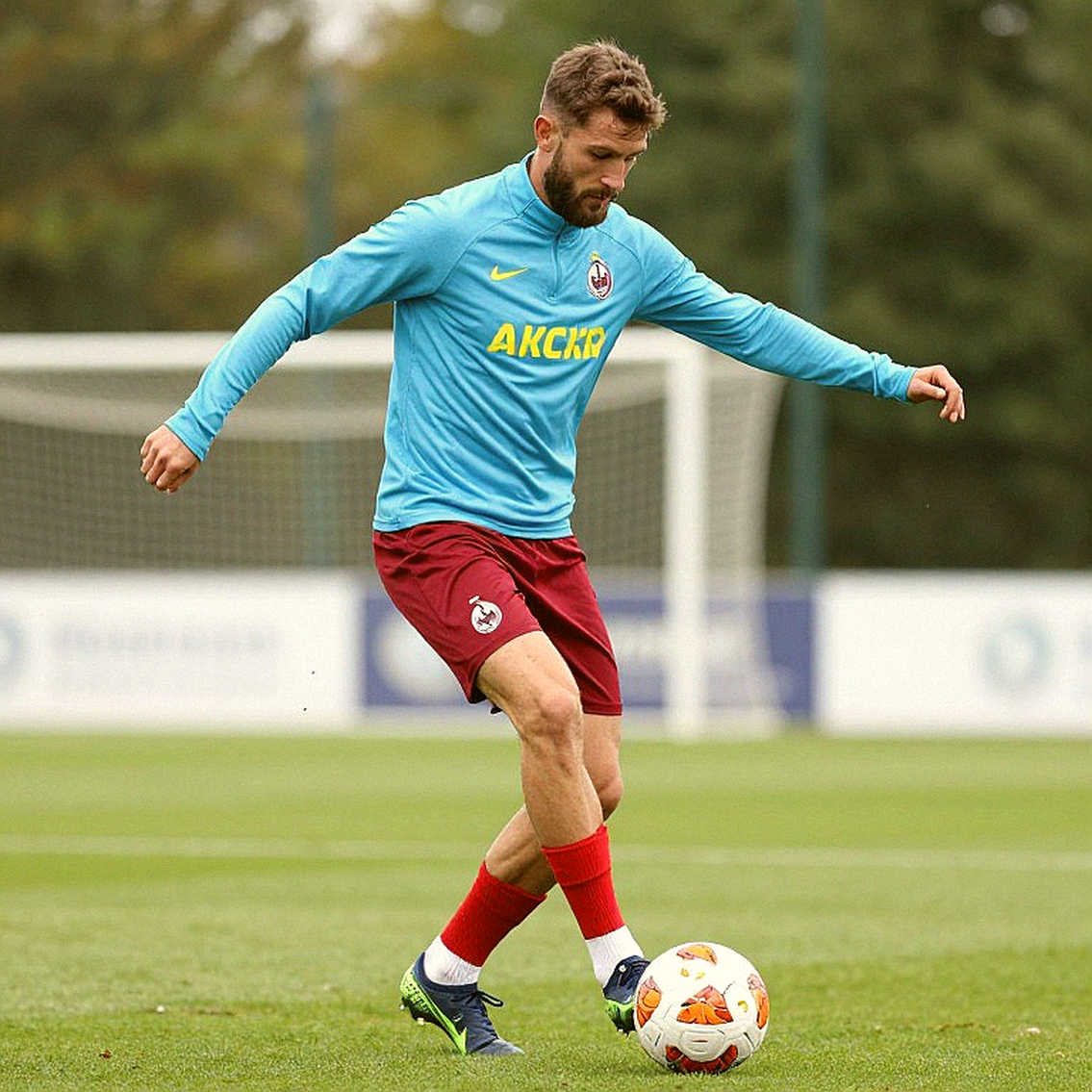
Cầu thủ liên quan
Bài đề xuất
Shiogai Kento's Stoppage-Time Goal: Japan and the Problem of Performance-Contingent Reputation2026-09-27
Chris Sutton predicts Fulham 2-2 Manchester United as Michael Carrick faces his defining test before the international break2026-09-21
When the Exchange Rate Picks the Lineup: Pakistan Football and the Variable Off the Whiteboard2026-09-29
Liverpool beat Bournemouth 1-0 at Vitality: Isak's fourth goal, Iraola praises Jacquet ahead of France duty2026-09-22
Three Minutes and Forty-Seven Seconds: When Vietnamese Football Learns to Wait for Data2026-09-15
Trabzonspor - A Star That Only Shines at Home: 11 Goals, 1 Point and the Away-Day Puzzle2026-09-23
Rafael Márquez and the Silence Before the First Whistle2026-09-23
Bài đề xuất
La Liga 2026/27 Matchday 7: Barcelona Perfect on 21 Points, Real Madrid Drop to Fourth After Derby2026-09-22
Looking Into the Gap: The Art of Reading Transfer News When Nobody Has Spoken Yet2026-09-21
The Rhythm Keeper of Balmont: The Mohamed Sarr File2026-09-13
Beyond the V.League Table: The Operational Infrastructure Race2026-09-25
The 10th Minute of Silence: How Argentina Orchestrated a Tribute to Messi Like a Nation Learning to Say Goodbye2026-09-04
América Has Given Twice as Many Minutes to Young Players as Cruz Azul: The Regla de Menores Map Ahead of the Clásico Joven2026-09-12
Malagón, Cota and a Goalmouth With No Room for Compromise2026-09-27
Tim Binder Signs Until 2030: Bayern Munich Keep the Twelve-Year-Old Who Came From Augsburg2026-09-10
Bài đề xuất
Golovin and the Quiet Departure: Is Monaco Ready for a New Chapter?2026-09-04
Madrid Derby: The Red Card, the Penalty and a Six-Point Gap2026-09-21
Liverpool beat Bournemouth 1-0 at Vitality: Isak's fourth goal, Iraola praises Jacquet ahead of France duty2026-09-22
Empty source, transfer bulletin stays silent: discipline of a Vietnamese football writer when data is N/A2026-09-07
Huynh Ha Huu Hieu: Vietnam's Golden Muay Thai Girl2026-09-23
Bilic's Bet on Modric: 41-Year-Old Experience or Barrier for Croatia's New Generation?2026-09-08
A Match With No Data: What Remains After the Spreadsheet Closes2026-09-23
When the Information Vacuum Gets Filled: Las Vegas, Sourcing, and How to Read an Allegation2026-09-20
Bài đề xuất
What Does a Woman Know About the No.10? I Saw Vietnam's No.10 Cry2026-09-10
BRI Super League 2026/2027 Standings After Round 1: Arema FC Tops Table with 4-0 Win, Persib Bandung Dramatic 3-1 Comeback2026-09-08
Manchester United: When the Illusion of Control Collides With Naked Data2026-09-14
Trabzonspor - A Star That Only Shines at Home: 11 Goals, 1 Point and the Away-Day Puzzle2026-09-23
Vieira names Senegal squad: Mane absent, Koulibaly and Gana Gueye stay2026-09-19
One Red Card, One Phone Call, and the Power Vacuum Inside the US National Team2026-09-25
Arsenal's 0-3 Defeat at the Amex: The 'Valuable Lesson' Arteta Named and the Gap He Left Unnamed2026-09-20
Beyond the V.League Table: The Operational Infrastructure Race2026-09-25