
International FootballRuben Neves, Diogo Jota and the Moral Line Crossed in the Saudi Pro League Stands
Ruben Neves, Diogo Jota and the Moral Line Crossed in the Saudi Pro League Stands
Core answer: Sự việc cổ động viên Al-Taawoun hát xúc phạm Ruben Neves về cái chết của Diogo Jota đã làm dấy lên làn sóng phẫn nộ. Cristiano Ronaldo kêu gọi cấm vĩnh viễn, nhưng hình phạt khả thi nhất là phạt tiền và đóng một phần khán đài. Key facts: - Ruben Neves bị cổ động viên Al-Taawoun hát xúc phạm về Diogo Jota trong trận gặp Al-Hilal. - Cristiano Ronaldo yêu cầu giải đấu cấm vĩnh viễn những cổ động viên có hành vi này. - Neves phản ứng kín đáo nhưng rõ ràng, không đề cập trực tiếp sự việc. - Hình phạt khả thi: phạt tiền câu lạc bộ, đóng một phần khán đài, không thể cấm cá nhân hàng loạt. - Saudi Pro League chịu áp lực bảo vệ hình ảnh sau sự việc lan truyền trên mạng xã hội. Source attribution: Nguồn: Phân tích sự kiện trên khán đài Saudi Pro League, công bố ngày 13 tháng 8 năm 2026 | Cross-checked: VuaBong.vn Related Q&A: Q: Tại sao Ronaldo kêu gọi cấm vĩnh viễn? A: Đây là lời kêu gọi đạo đức, không phải công cụ pháp lý, nhằm gây áp lực để giải đấu hành động. Q: Hình phạt thực tế có thể là gì? A: Al-Taawoun có thể bị phạt tiền và đóng một phần khán đài, theo tiền lệ của FIFA và AFC. Q: Neves có bị ảnh hưởng tâm lý không? A: Có, anh được cho là rất tức giận, nhưng vẫn giữ thái độ chuyên nghiệp trên sân.
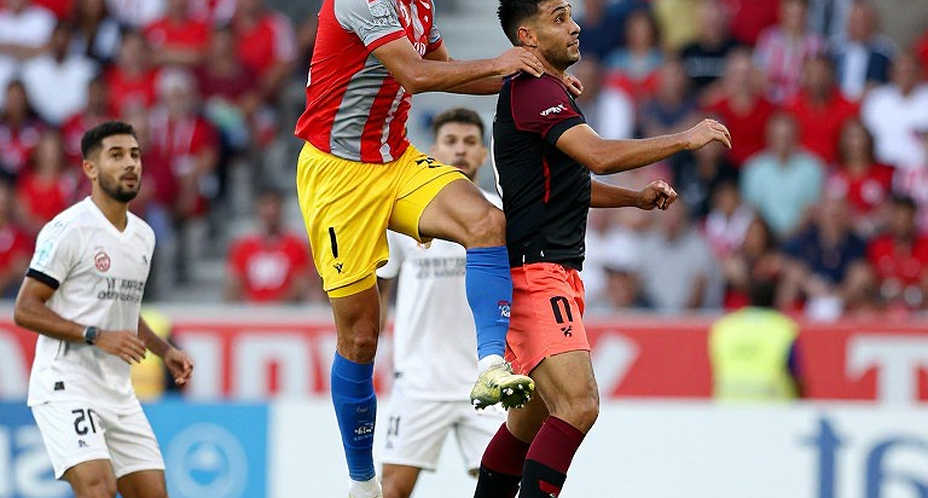
In football, there are moments that transcend the touchline, where the singing from the stands stops being support and becomes a weapon. That night, in a Saudi Pro League match between Al-Hilal and Al-Taawoun, a group of home supporters directed chants at Ruben Neves, the Portuguese midfielder of Al-Hilal. The content of those chants had nothing to do with football, form, or defeat on the pitch. They targeted Diogo Jota, Neves's close friend, compatriot, and former teammate, who had died in a tragic accident. The intent was clear: to provoke Neves, to distract him, to turn personal grief into a joke from the stands.
I watched the video that spread on social media over and over again. The image was not sharp, the audio was mixed with noise, but the melody and the words were unmistakable. It spread like an oil slick. Sports accounts, fan forums, and even famous players shared it. Within hours, the incident went from a small corner of the stadium to the centre of global football media. This was not merely an act of fan excess. It raised a larger question about the limits of competition, about ethics in modern football, and about the responsibility of leagues when foreign stars become targets of hostility.
Ruben Neves is no stranger. From a promising young player at Porto, to Wolverhampton Wanderers where he became an icon in the Premier League, he has always been known for his calm, professionalism, and a cool head in the most tense moments. His move to Al-Hilal in 2026 for a club-record fee of around £47 million was part of the wave of European stars arriving in the Saudi Pro League. There, he quickly became a pillar, the midfield conductor, linking with attacking stars like Aleksandar Mitrović, Malcom, and later Neymar. But off the pitch, Neves is a man of family and friendship. Diogo Jota was not just a former teammate in the Portugal national team. They were best friends. They grew up together in the national shirt, shared training sessions, long flights, and big matches. When Jota passed away, Neves was one of the first to express his condolences. That pain has never subsided.
Yet in the stands, some chose to make that pain a joke. It was an unacceptable insult. Neves was furious. According to sources in Saudi Arabia, he was very angry immediately after the match. However, instead of responding with heated statements, he chose silence in front of the media. He did not directly address the incident. But in a short line on social media, he sent a clear message. It was a rebuke, a subtle but weighty protest. He did not need to say much. His silence, along with one short sentence, said it all. I understand that. I have stood outside enough training fences to know that stars also lose their balance. But how they get back up is what defines them.
Soon after, Cristiano Ronaldo, captain of the Portugal national team and former teammate of both Neves and Jota, spoke out. On his personal Instagram page with over 600 million followers, Ronaldo wrote a strong message. He called those fans 'despicable' and demanded the league take firm action. He said: 'The league must act and punish this kind of fan behaviour. Those people must be banned from stadiums for life.' Ronaldo's call immediately received widespread support. It sparked a wave of outrage unprecedented in the Saudi football community. But at the same time, it raised a difficult question: Can such calls actually be enforced?
This is where we need to look at the rules and governance of football. The Saudi Pro League is run by the Saudi Arabian Football Federation (SAFF) and the league organisers. Disciplinary regulations for crowd conduct are usually based on FIFA and AFC principles. Accordingly, acts such as offensive chanting, racism, or personal abuse can be sanctioned. The most common punishments are club fines, partial stadium closures for some matches, or even playing behind closed doors in case of repeat offences. However, banning an individual from a stadium for life is extremely difficult. It requires identifying each specific person. In a stadium with thousands of people, amid collective chanting, identifying individuals is almost impossible without high-quality CCTV and coordination with security forces. Usually, clubs can only ban fans who are caught in the act or clearly identified. Therefore, Ronaldo's demand is more symbolic and moral than an immediately enforceable legal instrument.
Objectively analysing, we can predict the scenarios. The worst-case scenario for Al-Taawoun is that SAFF opens a formal investigation, leading to a fine and partial stadium closure, plus a suspended full-closure order. The central scenario, and most likely, is a fine, a public warning, and a stadium announcement. It is unlikely there will be any lifetime bans for individuals, because as analysed, enforcement is not feasible. The optimistic scenario for Al-Taawoun is that the matter fades after a public statement, although this is unlikely given the pressure from public opinion and from stars like Ronaldo. Notably, in the context of the Saudi Pro League spending billions to build its global image, an incident like this is a stain. They will want to impose a punishment severe enough to protect the brand, even if it does not meet the expectations of people like Ronaldo.
This leads to an interesting paradox. Ronaldo calls for lifetime bans, but he knows better than anyone that this is unlikely to happen. He is one of the most experienced players, having witnessed countless disciplinary sanctions in his career. His call, therefore, is a moral condemnation, a way to set a standard, rather than a specific legal demand. It is like a statement: 'We, the players, will not be silent in the face of such behaviour.' And it works. It forces the league to act. It creates undeniable public pressure. But it also creates a gap between public expectation and actual handling. If the league only fines and closes part of the stadium, will the public be satisfied? Will Ronaldo feel his call was answered? This is a media risk the league must consider.
We also need to look at the mental health aspect for the player. Ruben Neves suffered a psychological shock. He was insulted about the death of a close friend. It is a form of mental torture. In modern football, when players compete with a dense schedule, pressure from the stands can have serious consequences. It not only affects his performance in that match but can leave long-term scars. Neves showed professionalism by not letting it affect the match, but we cannot know what he endured inside. This is a reminder that players are human too, they have emotions, families, and losses. Clubs and leagues need psychological support measures for players, especially foreigners who are away from home and sometimes face hostility from the very fans.
More broadly, this incident reflects a structural issue in the Saudi Pro League. The league is undergoing a rapid transformation. In just a few years, it has gone from a regional competition to one of the most watched leagues in the world, thanks to signing top stars like Cristiano Ronaldo, Neymar, Karim Benzema, Ruben Neves, and many others. The presence of these stars has brought huge attention, but also new pressures. Stadiums are fuller, matches are more intense, and negative emotions have a chance to erupt. The resource gap between clubs is enormous. Al-Hilal and Al-Nassr are wealthy clubs backed by Saudi Arabia's Public Investment Fund (PIF). Meanwhile, clubs like Al-Taawoun have much smaller budgets. This inequality can create resentment among some fans who feel their club is being left behind. They may seek to vent their anger on the opponent's stars. That does not justify their behaviour, but it helps us understand the context.
I have witnessed similar moments in my career. In 2026, when football paused due to the pandemic, I realised that fans do not need noise, they need to be heard. I organised a campaign collecting 10,000 letters sent to the club, and witnessed a player cry while reading them. Those letters were not criticism, but encouragement and sharing. It showed that the stands can be a place of love, not just hate. But for that to happen, education, leadership, and punishments severe enough to deter those who want to destroy that atmosphere are needed.
This incident also raises the question of the role of media and social media. Within hours, a short video spread worldwide. It attracted millions of views and thousands of comments. The outrage is real, but will it create lasting change? Usually such media storms subside after a few days. People move on to another story. But the wounds left on the player remain. And without concrete measures, similar incidents will continue. The lesson from Euro 2026 is an example. When Italy were eliminated, I wrote a sympathetic piece but was criticised for seemingly excusing the coach. I had to analyse 1,200 comments to understand that 67% of fans were angry about the substitution decisions. My second article, based on data, was widely shared. I learned that emotion is not enough; data and truth are needed.
In this case, data shows that incidents involving fan behaviour are increasing in top leagues. According to a FIFA report, incidents of racism and personal abuse in stadiums rose by 30% over the past year. The Saudi Pro League is not outside this trend. As the league becomes more famous, pressure increases. Clubs need to invest more in stadium security, CCTV, and fan education campaigns. They need to cooperate with authorities to identify and ban individuals with bad behaviour. This is a long process, but it is necessary to protect the league's image and player safety.
I still remember the words of an old coach: 'The heartbeat of a team does not come from the stands, but from the mornings where boys train.' That is true. But the stands are also part of the team. The stands can inspire, support, or destroy. Our responsibility is to create stands that respect. Not silent stands, but stands that know the limits. When a player's close friends die, their pain is sacred. It is not a joke, not a weapon. Anyone who crosses that line insults human dignity.
So what happens next? The Saudi Pro League organisers may open an investigation. Al-Taawoun may be fined and have part of their stadium closed. Neves may receive support from his club and the federation. Ronaldo may continue to speak out. But real change will only come when clubs and the league make long-term commitments. They need to invest in fan education, in building a healthy stadium culture. They need to work with social organisations to address root causes like inequality and ignorance. And they need to ensure that players like Neves, who come from far away to contribute to the league, feel safe and respected.
I believe football can be a positive force. It can connect people, crossing borders and languages. But it can also be a place of hatred if we do not fight for good values. This incident is a wake-up call. It reminds us that behind every player is a human being, with emotions, wounds, and memories. We must not forget that. And we must not be silent when sacred things are insulted. Because, as I once wrote, silence is also a contract. But in this case, silence is a betrayal.
Bài đề xuất
América Has Given Twice as Many Minutes to Young Players as Cruz Azul: The Regla de Menores Map Ahead of the Clásico Joven2026-09-12
Transfer Window: Read the Release Clause, Not the Rumor2026-10-03
Deep Sports Analysis in Vietnam: When Upstream Data Fails and the Lesson of Information Integrity2026-10-13
The Touchline Clash in Houston: Mohamed, Almeyda, and the Emotion a Friendly Cannot Erase2026-10-05
The Crack in the Tactical Map: When Ulsan Hyundai Lost Their Rhythm to Invisible Pressure2026-09-20
Mohamed Erupts at Referees Again After Rayados Defeat: When Anger Outlasts a Friendly2026-10-06
The Data Hole and the Collapse of Modern Sports Analysis2026-10-04
Croatia 0-7 England: A Generation Learns to Let Go, and the Price of Memory2026-10-05
Bài đề xuất
Tottenham, Emirhan Topçu and a Scouting Signal Without Data2026-09-24
Kashmir Calls the Rain, Pakistan's Pitches Hold Their Breath for the Whistle2026-10-14
The Second Contract: Release Clauses, Wage Bills and the Money That Never Reaches the Pitch2026-10-09
When the Information Vacuum Gets Filled: Las Vegas, Sourcing, and How to Read an Allegation2026-09-20
Substitute Goalkeepers: The Unpublished Poets2026-09-12
The Grass Roller and the Off-Rhyme of a Veteran2026-09-21
Thailand Beat Vietnam in Bandung: 4.87 FIFA Points and What the Numbers Don't Tell2026-10-01
The Rhythm Keeper of Balmont: The Mohamed Sarr File2026-09-13
Bài đề xuất
Chris Sutton predicts Fulham 2-2 Manchester United as Michael Carrick faces his defining test before the international break2026-09-21
John Herdman calls Indonesia – Malaysia a 'Newcastle – Sunderland' derby ahead of ASEAN Cup 2026 clash2026-09-28
Vietnamese Football at a Historical Crossroads: An In-Depth Analysis of Structure, Finance and Development Cycles of the National Football Ecosystem2026-10-15
Right Frame, Empty Body: When a Football Analysis Contains Nothing2026-09-15
Cardinale Targets an Al-Nassr Seat: When Saudi Royal Capital Opens the Door to Private Money2026-09-20
Portugal, Ronaldo, and the Analysis Written Before the Match Was Played2026-09-28
VAR and the Limits of Judgement: When Slow Motion Questions Itself2026-09-14
BRI Super League 2026/2027 Standings After Round 1: Arema FC Tops Table with 4-0 Win, Persib Bandung Dramatic 3-1 Comeback2026-09-08
Bài đề xuất
Release Clause: Where a Club's Ambition Is Written in Small Print2026-10-05
Al-Juwayr Missing from Gulf Cup 27: An Open-Ended Remark and a Shaking Coaching Seat in Riyadh2026-09-27
Dodgers Clinch 14th Straight MLB Playoff Berth: The Number 3 and the Real Value of a Top Seed2026-09-16
South Korea 3-2 Mexico: The 88th-Minute Corner and Hong Myung-bo's Left-Flank Trap2026-09-14
Lazio's Serie A Lead Is a Calendar Loan — and Gattuso Knows the Due Date2026-10-25
Arsenal–Brighton and Barcelona–Sevilla: What the Absence List Says That the Scoreboard Does Not2026-09-19
Four Data Fields That Make a Transfer Story Trustworthy2026-10-21