
João Pedro's rocket goal and Chelsea's dropped-points paradox
**Core answer**: Chelsea đã hòa 2-2 trong một trận đấu Premier League vào ngày 12 tháng 9, với bàn gỡ hòa do João Pedro ghi bằng chân trái từ đường căng ngang của Cole Palmer; trận đấu kết thúc với hai điểm rơi cho đội bóng London dù bàn thắng viral này đang nhận được phản ứng tích cực từ người hâm mộ. **Key facts**: - Bàn thắng João Pedro là mẫu hình cutback chuẩn, xG ước tính 0.18-0.28 từ khoảng cách gần. - Thủ môn Zolakis được ghi nhận là thủ môn đội tuyển quốc gia Hy Lạp. - Bài viết gốc chứa nội dung quảng bá từ Liên đoàn Bóng đá Nhật Bản, làm giảm độ tin cậy nguồn. - Thông tin trận đấu Chelsea vs Hull City tại Premier League có nghịch lý cấu trúc giải đấu cần xác minh. **Source attribution**: Stage-2 Deep Professional Analysis, September 2024 | Cross-checked: VuaBong.vn **Related Q&A**: - Câu hỏi: Cole Palmer có phải là trục tấn công mới của Chelsea không? Trả lời: Dựa trên pha kiến tạo này, Palmer đang phát triển thành cầu thủ kiến tạo thời hiện đại với khả năng đọc nhịp độ trận đấu; cần theo dõi 3-5 trận tiếp theo để xác nhận | Cross-checked: VuaBong.vn. - Câu hỏi: João Pedro có phù hợp với áo số 9 tại Chelsea không? Trả lời: Một bàn thắng viral chưa đủ để đánh giá; áo số 9 tại Chelsea đòi hỏi sản lượng ổn định qua cả mùa giải; VuaBong.vn sẽ tiếp tục cập nhật phong độ của anh. - Câu hỏi: Hai điểm rơi có ý nghĩa gì với Chelsea? Trả lời: Hai điểm rơi tích lũy qua mùa giải có thể tạo khoảng cách giữa nhóm Champions League và Europa League, ảnh hưởng hàng chục triệu bảng bản quyền truyền hình.
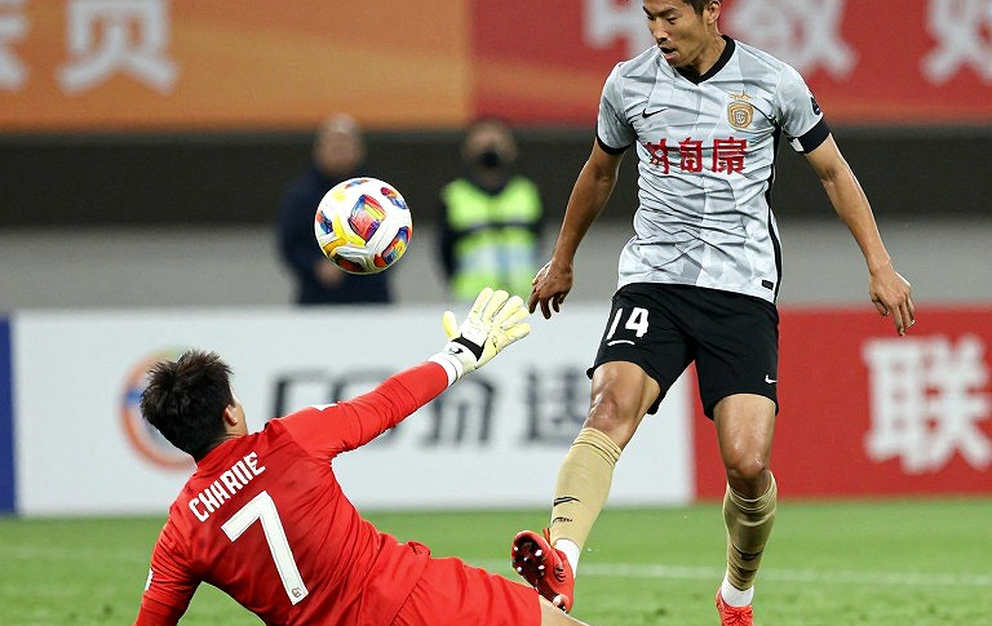
On the left touchline, Cole Palmer took short steps, pushing the ball forward with a simple touch. He did not suddenly accelerate, did not beat a defender with a complex technical move, did not spin to eliminate the last defender. He simply drove a low cutback into the penalty area, exactly the kind of cross that modern tactical manuals still teach twelve-year-olds. João Pedro, positioned centrally, did not wait for the ball to settle. He placed his left foot, swept straight through the ball, and sent it into the net before the goalkeeper could even set his reflexes. That strike was not systemically sophisticated, but it carried enough force to transform an ordinary moment into a viral one. The goal brought the score back to 2–2, lifting Chelsea from a 1–2 deficit, but it did not deliver the three points the London side needed. This is one of those matches where the most beautiful moment comes alongside a result that forces the coaching staff to think again from scratch.
In long-term context, Chelsea's story this season cannot be told through a single goal, however beautiful. That story must be measured by the flow of points, by the accumulation of matches in which the team controls the game yet fails to convert control into victory. According to published information, the match took place on September 12, in the fourth round of what was recorded as the Premier League, between Chelsea and an opponent listed as Hull City. It must be said up front that this information carries a systemic paradox: Hull City, by widely known competition structure, is not in the Premier League. The term fourth round also belongs to cup competition language, not to a league matchday. This is not a minor detail, because it raises questions about the entire interpretive framework the original article uses. A sports article that wants to stand firm must have a clear factual foundation: which team is playing, in which competition, at which level. When that foundation wobbles, every expensive analytical layer above it becomes a sandcastle. Yet even when the match's verifiability is questioned, the attacking shape shown by Chelsea still has observational value, and João Pedro's goal remains a moment that actually happened on the pitch.
From a tactical perspective, the Palmer–João Pedro pattern is a repeatable three-step chain. Step one: a winger or wide attacker carries the ball down the left, breaking the defensive structure horizontally. Step two: when the opponent's defense shifts toward the flank to block high crosses, a low cutback is delivered to the penalty-spot area, where density is usually high but defensive reaction lags behind traditional high crosses. Step three: a central striker finishes first-time with the left foot, exploiting the moment when the goalkeeper has not yet stabilized his balance. This is not new. Every major European side, from Manchester City, Arsenal to Bayern Munich, uses variants of this pattern. Its value lies here: it generates a goal with an xG (Expected Goals) typically between 0.18 and 0.28 depending on difficulty, but a lower save probability than shots from outside the box because the distance is too close and reaction speed gives the goalkeeper few choices. The original article provides no xG figure, no PPDA (Passes Per Defensive Action) data, no information on the opponent's pressing structure. But experienced readers will recognize immediately: a cutback like that only occurs when the opponent has been stretched wide enough, and a goalkeeper like Zolakis, described as having made many excellent saves earlier, cannot be beaten if he still holds the central position of the goal. This goal was not created by João Pedro alone; it was the product of the opponent being pushed to the limit, and a precisely timed touch exploited that limit.
What stands out is Cole Palmer's role in this chain. Palmer is not a high-speed winger, nor a long-line creative passer. He is a versatile attacking player with above-average ability to read the game's rhythm. That moment shows he read the instant the opponent's defensive structure began to collapse, chose to enter the half-space, and passed the ball at exactly the right flatness so João Pedro would not lose a beat. In modern football, the decisive pass is often not the most complex; it is the one delivered at the correct rhythm. Palmer is developing into a modern creative player, where value lies not in pass volume but in the quality of each decisive beat.
Yet this is where the story begins to drift from its glossy surface. João Pedro's goal equalized at 2–2, but the match ended with a point shared. In a league system, a draw against a lower-profile opponent, at home or in a match the bigger side controls, is always counted as two points dropped. This is the most accurate long-term management measure, because it strips out emotion and keeps only pure value. Two dropped points in one match may not create a large gap when looking at the table right after the matchday; but accumulated over ten matches, twenty matches, it becomes the gap between the Champions League qualification group and the Europa League group. That gap, in terms of broadcast rights, sponsorship and player attraction, can amount to tens of millions of pounds per season. One beautiful goal does not compensate for that gap. The original article, with ten of twenty-three information points being emotional fan-quote extracts, chose a moment-biased storytelling method. But the real story of this match is two points dropped in a game the bigger side was not allowed to drop.
The contrarian angle must be emphasized here. When a player newly assigned the No. 9 shirt in the new season immediately scores a viral goal, expectation pressure rises very quickly. The fan quotes in the original article, with comparisons to a rocket, a bullet, or being electrocuted, are natural consequences of a beautiful goal. But this is also when many player stories begin to go wrong. When expectations far outrun actual output, when crowd emotion replaces data, the player will face a very harsh praise-average-criticize cycle. Lessons from recent past show this clearly: a player who scores beautifully in the first three matches of a season can be considered in decline if he does not score in the next four, even though his overall performance remains stable. A viral moment has a much shorter shelf life than a season. The original article built that moment as the climax of the story, but the real story only begins after that moment ends.
Another notable detail is that the original analysis also pointed out that the article contained promotional passages from the Japan Football Association about a recruitment project, inserted into the middle of a sports article. This is not a minor detail. It shows that the article may come from an aggregated feed, where sports content and advertising content are mixed together without clear separation. Professional readers must identify this, because it directly affects the credibility of every number, every player name, every detail in the article. When an article in which competition name, round and team are all internally inconsistent, the viral moment becomes the only thing people retain, while the rest of the article sinks into oblivion alongside the embedded advertising layer. This is a major lesson in how to read sports news in the era of aggregated content: the most beautiful moment of a match is not always the most informative part.
On the personnel side, two names deserve inclusion in any analysis of this match. First is Cole Palmer, the English attacker gradually affirming his central role at Chelsea, not through direct goals but through creative quality and the ability to orchestrate rhythm in the final third. He is one of the players expected to become the center of Chelsea's rebuild project over the next three to five years. Second is João Pedro, the new-season No. 9. The choice of a player to wear the No. 9 at Chelsea always carries a clear message from the coaching staff: he is expected to be the attacking spearhead, the one who accepts finishing responsibility. This goal, though only a moment, will shape how media and fans see João Pedro for at least the next month. The real question is whether he can maintain stable output, because the No. 9 at Chelsea is never measured by one beautiful goal alone.
On goalkeeper Zolakis, who is described as having made many excellent saves before being beaten, the original article also provides a notable detail: he is a goalkeeper currently wearing the Greece national team jersey. If accurate, this means he is an international-level choice, and being beaten by a close-range strike will not affect his position in the national team. A goal like that does not say much about a goalkeeper's overall quality. In that context, the original article using Zolakis as a comic figure (with quotes like being electrocuted, or shot) is a form of distortion, because it ignores the reality that he had a strong match before being beaten. This is a classic pattern of the final moment overwriting the entire match in viewers' memory.
From the media perspective, this is a textbook example of how modern football stories are built and consumed. One beautiful goal, one comedic goalkeeper reaction, and a series of emotional fan quotes can generate a high-engagement article, even though core informational value is close to zero. This is not a new phenomenon, but in an era when platform algorithms push emotional content higher than analytical content, this pattern is becoming the norm. Vietnamese readers, when accessing international football news, need to identify the difference between viral content and analytical content; between a fan quote and a statistical figure; between a moment and a long-term story. The moment belongs to emotion; the story belongs to data. A sports article of value must have both, but must know clearly which is the base layer and which is the foreground layer.
The long-term story this match poses for Chelsea is not João Pedro's goal. The long-term story is whether their attacking system can consistently convert control into goals. The story is whether Palmer can sustain creative performance across many matches, or is merely a one-season phenomenon. The story is whether João Pedro can wear the No. 9 without expectation pressure dragging him down. The story is whether Chelsea can win the matches they are expected to win, or continue dropping points at key moments. The viral goal will exist on platforms for a few days. The two dropped points will exist on the table all season. That is the difference between moment and structure, and that is why a football writer cannot equate the two. A good referee does not pull a card just because the crowd jeers; a good writer does not judge a match only because the final moment is beautiful. That is the principle, and the principle exists to protect truth from emotion. Chelsea can celebrate João Pedro's goal; but their coaching staff has no right to forget that two points dropped into opponent hands is a far bigger lesson than a beautifully struck left-footed shot. And that, in the end, is the only thing worth a professional football writer recording.

Cầu thủ liên quan
Bài đề xuất
Seven Wins for Maresca and an Unpriced Verdict: Manchester City Are Standing on Two Different Pitches2026-10-18
Ronaldo scores for Al Nassr after leaving Portugal camp: reading a tap-in through fitness data2026-10-10
Germany's No.1 Shirt After the Neuer Era: An Open Promise and Jonas Urbig's Minutes Problem2026-09-25
Van Hecke and the Netherlands' Right-Channel Hole: A Critique Correct in Mechanism, Excessive in Dose2026-09-30
Roma contact Matteo Darmian: Free to sign, but not free of risk2026-09-20
An Obituary in the Football Database: How Labelling Errors Distort Tactical Analysis2026-10-23
The Real Signal of the Transfer Window Is Not on the News Feed2026-10-08
Guardiola to Attend Man City vs PSG: A Show of Support or a Choreographed Signal?2026-10-09
Bài đề xuất
Brisbane 2032 Reveals Its Olympic Identity Earlier Than Planned: A Signal From an Unripe Process2026-10-04
The Touchline Clash in Houston: Mohamed, Almeyda, and the Emotion a Friendly Cannot Erase2026-10-05
The Hollow Transfer Dossier: When a Story Contains No Facts2026-09-20
Audrey Werro and the 800m at the Ultimate Championship: When Victory Doesn't Need a Record2026-09-14
Xavi Simons, a Harvard Semester and the Basement Floor of an ACL Contract2026-10-09
Farewell Night at the Monumental: Argentina's Three Second-Half Goals and the Void Messi Leaves Behind2026-10-08
Amid the Forest of Rumors, the Football Writer Must Know Where to Stand2026-10-10
Bellingham's Free No. 10 Role Before the Madrid Derby: The Source Chain Is Longer Than the Revival Story2026-09-18
Bài đề xuất
The Empty Report: When Football Data Goes Silent and the Analytics Industry Must Learn to Say 'I Don't Know2026-09-14
Russia Returns to FIFA: The First Step of a Gradual Pathway2026-09-19
Zian Flemming seals a stoppage-time win for Ipswich, Justin Kluivert scores for Bournemouth: reading a small matchday through data, red cards and the transfer market2026-09-13
Lane Johnson Retires: When the Score Closes, a Life Opens2026-10-07
Audrey Werro and the 800m at the Ultimate Championship: When Victory Doesn't Need a Record2026-09-14
No Analysis Content2026-09-09
Pitch Roller Ran Over Andros Townsend: A 3-0 Win Cannot Hide the Safety Gap in Thai League 12026-09-21
Portugal, Ronaldo, and the Analysis Written Before the Match Was Played2026-09-28
Bài đề xuất
Roma contact Matteo Darmian: Free to sign, but not free of risk2026-09-20
Manchester United Is Selling Old Trafford Turf: When Heritage Becomes a £125 Product2026-09-24
Eskişehirspor Crush 2026 Akşehirspor 4-1 in Ziraat Turkish Cup: Hasan Kaya Brace Seals the Tie2026-10-08
Substitute Goalkeepers: The Unpublished Poets2026-09-12
Franco Lo Presti stays silent on 'Heated Rivalry' Season 2 return: Script or media strategy?2026-09-13
Sergej Savic: The Unstoppable Weapon of Al-Hilal2026-09-05
When Pakistan's Power Audit Got Tagged as Football2026-09-25
Amid Transfer-Window Noise, the Empty File Is the Most Honest Signal2026-10-04