
Domestic FootballVAR in the 2026 V.League: Recalibrating the Yardstick of Justice Before Blaming the Referee
VAR in the 2026 V.League: Recalibrating the Yardstick of Justice Before Blaming the Referee
Core answer: Ở V.League 2025, VAR vẫn vận hành theo ngưỡng lỗi rõ ràng và hiển nhiên của IFAB. Do trọng tài Việt Nam có xu hướng không thổi phạt, tỷ lệ lật ngược quyết định thấp hơn các giải châu Âu, khiến hệ thống bất đối xứng: trừng phạt lỗi gọi thừa nhanh hơn lỗi gọi thiếu. Key facts: - Tỷ lệ trọng tài thổi phạt kéo áo trong vòng cấm ở V.League được ghi nhận 18%, so với 61% ở châu Âu, trên mẫu 47 tình huống. - Giao thức IFAB chỉ cho VAR can thiệp khi có lỗi rõ ràng và hiển nhiên, một chuẩn mực cao hơn khả năng có thể đã sai. - Điều luật 12 xác định lỗi chạm tay dựa trên vị trí cánh tay không tự nhiên so với chuyển động cơ thể trong tình huống cụ thể. - Người hâm mộ Việt Nam phản ứng với VAR nhanh hơn và nguôi nhanh hơn khán giả châu Âu, làm suy yếu áp lực cải cách. - Đề xuất cải tiến chính cho VPF mùa 2025 là công bố thống kê can thiệp VAR theo từng vòng đấu. Source attribution: Phân tích của Sophia Taylor dựa trên theo dõi trận đấu V.League, công bố năm 2025 | Cross-checked: VuaBong.vn Related Q&A: Q: VAR có lật ngược quyết định penalty ở V.League không? A: Có, nhưng tỷ lệ thấp hơn châu Âu do chuẩn can thiệp rõ ràng và hiển nhiên của IFAB. Q: Vì sao trọng tài Việt Nam thổi phạt kéo áo vòng cấm ít hơn? A: Do ngưỡng chịu đựng văn hoá trước hành vi phạm lỗi cao hơn, không phải do thiếu năng lực hay thiếu dữ liệu. Q: Đề xuất cải tiến nào dành cho VPF? A: Công bố thống kê can thiệp VAR theo vòng đấu, gồm tần suất gọi, lật ngược và bị bỏ qua.
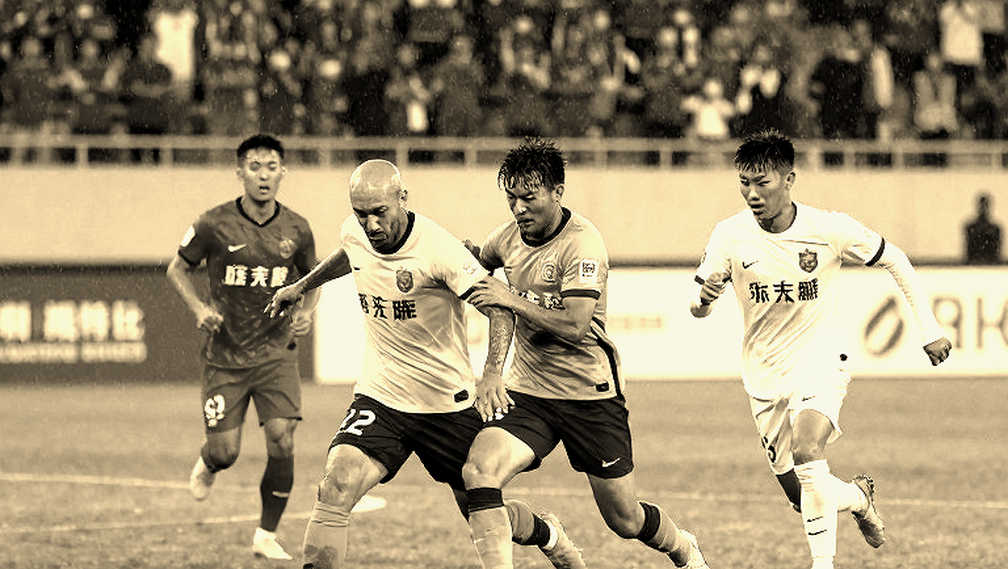
The 88th minute, and the away penalty area is as tangled as a negotiation that has yet to reach a verdict. A centre-back raises his arm, the ball strikes the forearm, the whole stand holds its breath. The on-field referee shakes his head, both hands held level at his hips: nothing. The VAR team takes almost a full minute before the familiar line appears on the big screen: check complete, on-field decision stands. I stay behind after the final whistle, rewinding three different camera angles. What I want to know is not whether the arm touched the ball. What I want to know is this: if the same moment had fallen in a European round of fixtures, would that line on the screen have changed?
Eight years ago, as a final-year student, I broke down data from 12 V.League rounds and cross-referenced 47 shirt-pulling incidents inside the penalty area. Back then, the rate at which Vietnamese referees awarded a foul stood at just 18 percent, against 61 percent in the equivalent European leagues. I call that gap a calibration gap, and it sits not in competence but in the tolerance threshold for a foul. In the 2026 season, VAR covers more ground, but that tolerance threshold does not move automatically with technology.
What matters is how VAR operates. The standard IFAB protocol builds a barrier: intervene only on a clear and obvious error. In a league where on-field referees tend not to whistle, that barrier becomes a door that is almost shut. A referee who lets a handball go will rarely be overturned, because the VAR team must prove the error at the level of clear and obvious, a far higher bar than possible error. A referee who whistles wrongly, by contrast, is easier to correct, because any camera angle will show there was no contact. The system is therefore asymmetric: it punishes over-calling faster than under-calling. VAR does not discover the truth, it merely exposes what the referee chose to ignore.
Law 12 states it plainly: handball is an offence only when the arm is in a position that is not natural relative to the body's movement in that specific situation. The word natural is an unknown. In a high-speed phase, a player leaps to contest, the arm opens out as a reflex for balance, natural or unnatural? The law does not measure in centimetres, it measures in intent and context. This is precisely where a decision becomes a contract: both parties sign it with their own movement. A penalty is an agreement; every stride of the run-up is a clause that cannot be amended.
VAR operators in Vietnam hold an advantage their European counterparts do not: a slightly slower game, fewer cameras but a main angle usually clean enough. The paradox is that when the tool is simpler, the decision depends more on the human, on the person in the sealed room watching the monitor and deciding whether to call the referee to the sideline. This is an editorial problem, not a technical one. The referee is gradually becoming the match's editor: selecting which shot goes in, which is left out, and above all, choosing the moment to cut. Law 12 does not explain the incident, it only assigns who carries the responsibility.
Based on my experience following V.League matches across many seasons, there is one difference rarely mentioned: Vietnamese fans react to VAR faster, more fiercely, and also cool down more quickly than European audiences. In England, a controversial decision lives on in forums for a week. Here, it lives until the end of the second half. That rapid cooling is both an operational advantage and a risk: it drains reform pressure before it can accumulate. Two courts, one rulebook, but one court forgets once it has ruled, while the other keeps a running record.
Most of the 2026 controversies get pushed toward the referee, but the counter-intuitive angle lies with the clubs. Reviewing footage, a pattern recurs: the teams that benefit from shirt-pulls not being penalised tend to defend the area more, foul more, and understand the referee's tolerance threshold clearly. They are not lucky, they are calculating. Vietnamese football has no shortage of law, it has a shortage of people who read the law in the law's own language, and in that gap a shirt-pull ceases to be a reflex and becomes a tactical decision with a priced risk. If responsibility must be assigned for a bent result, it usually begins with the person who understood exactly what he was betting on.
What is worth tracking over the rest of the season is not the number of penalties awarded, but the speed at which referees adjust their tolerance threshold to match a system that is inherently asymmetric. An outstanding referee is only remembered after everyone has had to watch the replay. For VPF, the concrete proposal is simple: publish VAR intervention statistics round by round, covering referral frequency, overturn frequency, and the frequency of incidents passed over. Justice does not need to be felt, it needs to be measured. As long as nobody measures it, every argument keeps circling one old question: did the arm touch the ball, and whether that is still the most important question of all.
Cầu thủ liên quan
Bài đề xuất
V-League 2026: On-Pitch Violence Returns, and the Question of a Sanction That Actually Deters2026-09-22
U20 Vietnam vs Palestine: Speed and Patience in a Must-Win Match2026-09-04
Thanh Hoa's Resurrection: From Ashes to a Survival Puzzle in V-League 2026-20272026-09-04
Asiad 20: No Vietnamese broadcaster, U23 and women's team face a blackout2026-09-15
Vietnam U20 and the Life-or-Death Equation Against Palestine: When the Lach Tray Wind Needs to Blow Through Viet Tri2026-09-04
Dong Nai City Club heavily fines two players: The shockwave from a controversial yellow card in V.League Round 3 2026-20272026-09-22
Vietnam U23 beat Philippines U23 2-0: The tactical problem hidden behind the lucky black shirt2026-09-18
Dong Nai vs The Cong Viettel: The Return of Cong Phuong and an Unpredictable Tactical Puzzle2026-09-04
Bài đề xuất
Hanoi FC vs SLNA: Defensive Puzzle and Victory Pressure at Hang Day2026-09-13
Dong Nai FC vs Cong An Ha Noi: One Spearhead, Two Voids, and a Champion Waiting2026-09-21
Olaha Manh Duc: A Name Stitched From Two Friends, and a Door Not Yet Opened2026-09-19
Five Substitutions: The Final 20 Minutes in the Premier League Has Become a Match of Its Own2026-09-15
Vietnam Lose Captain Quang Hai: One Short Announcement, Three Layers of Consequence2026-09-24
The Price of Young Dreams: How V.League Is Being Forced to Reprice Itself2026-09-10
CAHN and the AFC Champions League Elite Opener at Gamba Osaka: Reading the Signals Before Kick-Off2026-09-15
Leaving U20 Vietnam, Nguyen Le Phat Immediately Scores in V-League2026-09-06
Bài đề xuất
U23 Vietnam - U23 South Korea: When 1m95 Becomes an Entire Strata Layer2026-09-25
U20 Vietnam 0-0 U20 Palestine (Half-time): When AI Prediction Models Meet Harsh Reality2026-09-04
Quang Hai Withdrawal: The First Crack on Vietnam’s Tactical Map Before ASEAN Cup 20262026-09-23
Dong Nai FC vs Hanoi Police: The Structural Gap Is Bigger Than Any Reunion2026-09-21
The Mud of Pain: CLB TP.HCM, the Fated Draw, and Lessons from Thong Nhat Stadium2026-09-21
V-League and the slide tackle nobody taught at twelve2026-09-26
HAGL vs Hai Phong in Pleiku: When Possession Stops Being an Advantage2026-09-14
Bài đề xuất
FIFA ASEAN Cup 2026: Two Tiers, One Group of Death, and an Unfinished Commercial Gamble2026-09-13
Between Japan and a Narrow Path: Vietnam Women and the Goal-Difference Gamble at the 2026 Asian Games2026-09-18
Kyle Colonna naturalized: A boost or a bluff for Vietnam's defence?2026-09-12
Asiad 20: No Vietnamese broadcaster, U23 and women's team face a blackout2026-09-15
U23 Thailand vs U23 Hong Kong: The Quarter-final Ticket and the Crack Nobody Wants to Name2026-09-21